
Increased the value of their digital assets by 100% with Portfolio DAM.
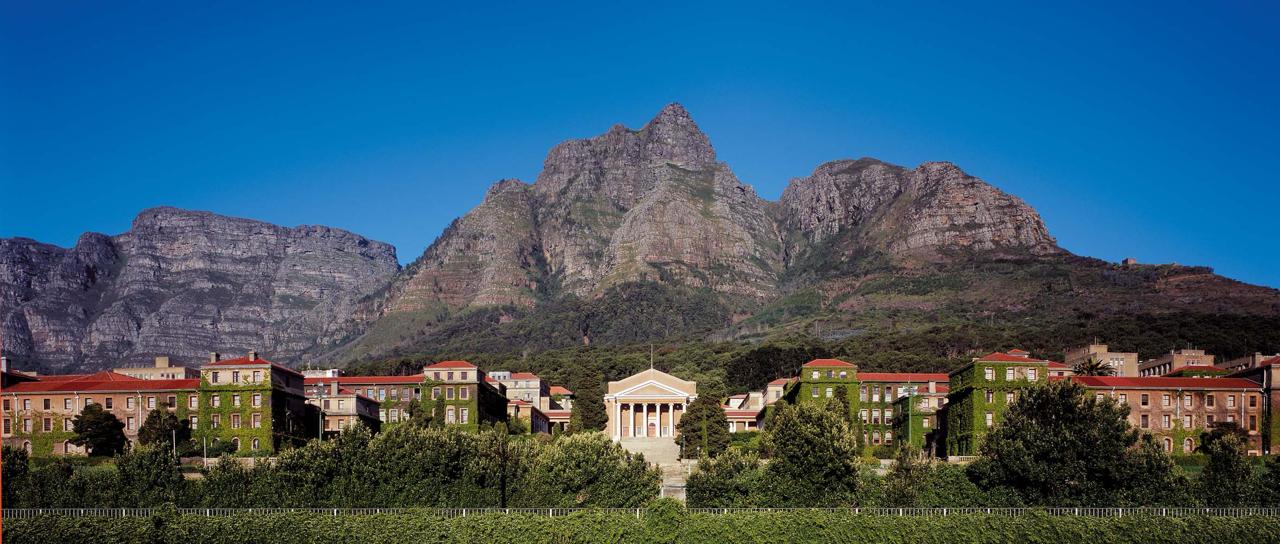
University of Cape Town Doubles Its Digital Archive with Portfolio DAM
The University of Cape Town (UCT) is the oldest university in South Africa and currently the highest-ranked university in Africa. With more than 29,000 students and 5,000 staff across six faculties, UCT’s Communications and Marketing Department (CMD) serves as the central hub for the institution’s digital presence.
In March 2018, CMD implemented Portfolio DAM to provide structure and control for a rapidly growing, highly fragmented digital archive.
At the time, approximately 250,000 assets were migrated into the system. The majority of that migration was completed within the first month, with additional assets added as legacy drives and shared volumes were uncovered. The process involved finding external hard drives, shared network locations, personal storage, CDs, and DVDs, then sorting, structuring, and copying everything into a single, managed environment.
“The biggest challenge was not just moving files. It was finding them, structuring them properly, and creating one consistent place where everything could live,” says Nico Badenhuizen, Technical Specialist: Communications and Marketing.
Before 2018, assets were scattered across countless folders and personal storage systems. Each person stored content according to their own hierarchy. Retrieval depended on knowing where something had been saved. There was no shared structure and no reliable way to search across the full archive.
Portfolio changed that.
The system became the default place where everything lives. Today, CMD manages nearly 500,000 curated, searchable assets within Portfolio for UCT. The archive has effectively doubled in size over eight years, supported by the steady addition of 11,000 to 13,000 curated images annually, alongside a growing video collection.
As adoption increased across the team, the benefits became obvious. One person could catalogue assets correctly, and everyone else could find them quickly. The burden shifted away from individuals remembering folder locations to a shared, metadata-driven system that exposed titles, dates, keywords, and descriptions.
Response times changed dramatically. Requests that could previously take a week or more can now be handled in minutes. In many cases, colleagues can search and retrieve assets themselves without needing assistance.
This transformation proved critical in high-pressure scenarios.
The ability to search across years of images and video lets us quickly pull together the full picture when we need it, whether for annual reports, a senior leader project, or a particular topic.
Media responsiveness has also improved significantly.
“That's why the fast turnaround offered by Portfolio was so important to us.”
Beyond internal workflows, CMD uses NetPublish to create controlled galleries for external audiences. Official logos and brand assets are made available in structured, access-controlled portals. This ensures brand consistency while reducing manual distribution.
Today, Portfolio is not simply a storage solution. It is UCT’s institutional memory. It ensures that the university’s visual history is discoverable, usable, and preserved in a structured way.
With a relatively small communications team managing a large and growing archive, having a single, trusted system in place positions UCT to respond confidently to whatever comes next while safeguarding the institution's long-term legacy.
Copyright © 2026 Portfolio DAM, LLC. All rights reserved. | +1-857-408-4923 WhatsApp | info@portfoliodam.com
Privacy Policy | Terms of Use | Accessibility